Delhi school fee law deferred: Why the new rules won’t apply in 2025–26

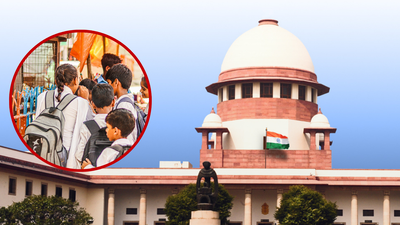
When the Delhi School Education (Transparency in Fixing and Regulation of Fees) Act, 2025 was notified in August 2025, it was meant to do something straightforward: Replace ad hoc fee disputes with a predictable, committee-driven process. What followed instead was a compressed implementation schedule that collided with a running academic year, prompting the Supreme Court to step in—not to strike the law down, but to question the haste in its implementation. In other words, the Court asked for the calendar to make sense first. The government responded by taking 2025–26 off the table.Earlier this week, LiveLaw reported, the Supreme Court of India recorded the Delhi government’s statement that the new fee-regulation regime will not be implemented in the current academic year, 2025–26. This closed the matter for now, keeping all legal questions open for adjudication before the Delhi High Court. The decision landed alongside another government move: A Gazette notification that resets timelines, creates appellate structures, and caps interim fees, effectively preparing the ground for enforcement from 2026–27. Read together, the court’s warning on pace and the government’s administrative recalibration underline the same constraint—the difficulty of enforcing a new regime in the middle of a school year.
Inside the Gazette: How Delhi is sequencing school fee regulation for 2026–27
The Delhi government’s latest Gazette notification does three practical things: it resets the implementation clock, sets up the appeal architecture, and locks an interim ceiling to prevent fee drift while the new regime is being readied for 2026–27. According to PTI, schools must constitute the School-Level Fee Regulation Committee (SLFRC) within 10 days (with already-formed committees treated as valid), submit proposed fee structures for the 2026–27 to 2028–29 block within 14 days of committee formation, and the Directorate of Education must set up District Fee Appellate Committees within 30 days. Meanwhile, schools cannot charge more than the fee being collected as on April 1, 2025 until the new structure is fixed, with any excess to be adjusted later, subject to pending court outcomes.
Before the pause: How a compressed rollout ran into the calendar
By January, the story was no longer just about a new law. It was about whether the system had any room left to absorb it. The Act is designed for a clean annual cycle: committees first, fee proposals next, objections and appeals after—before a school year begins. But the rollout landed late. Schools were being asked to constitute the committee architecture and file proposed fee structures while 2025–26 was already underway, with budgets locked and households already paying into the year.That pressure surfaced first in court. The Delhi High Court declined to stay the Directorate of Education’s notification on committee formation, but it extended deadlines to make compliance workable. The committee-formation cut-off was pushed from January 10 to January 20. The last date for submitting proposed fee structures was extended from January 25 to February 5.It was after this High Court order that private unaided school associations moved the Supreme Court. The matter first came up before a bench of Justices P S Narasimha and Alok Aradhe on January 19, 2026, where the Court questioned the government’s “over-anxiety” to operationalise the committee framework for a year that had already started, warning that such a mid-session switch risked becoming unworkable and retrospective in effect.When the matter came up before the Supreme Court in January, the bench of Justices P S Narasimha and Alok Aradhe made its discomfort explicit. “It will be unviable,” Justice Narasimha said, warning against “forcing people overnight” into a new compliance regime. The bench also cautioned that “in a hurry” committees may not even be properly constituted. After those concerns, Delhi recalibrated its sequencing: a Gazette notification reset timelines and set up the appellate architecture, and on February 2 the government told the Court the regime would not apply to 2025–26. With that assurance, the Court said its earlier concern was about speed, not intent—and found no urgency to intervene, leaving the merits to the Delhi High Court.
Before the pause: How a compressed rollout ran into the calendar
By January, the story had shifted from policy design to execution capacity. The question was no longer whether Delhi needed a fee-regulation regime. It was whether the system could absorb a full compliance architecture in the middle of a running year.The Act assumes a clean annual operating cycle: Committees are constituted early, fee proposals are tabled, objections are processed, and appeals have time to run—before the academic year’s financial commitments harden. But the rollout arrived late. Schools were being asked to build the committee scaffolding and file proposed fee structures even as 2025–26 was already in motion, with budgets fixed and households already paying into the year.That compression surfaced first in court. The Delhi High Court declined to stay the Directorate of Education’s notification on committee formation, but it also acknowledged the implementation squeeze by extending deadlines. The committee-formation cut-off moved from January 10 to January 20. The last date for submitting proposed fee structures shifted from January 25 to February 5.It was after this High Court order that associations of private unaided school managements moved the Supreme Court. When the matter first came up on January 19, 2026, before Justices P S Narasimha and Alok Aradhe, the bench framed the problem as one of feasibility. Justice Narasimha described mid-session enforcement as “unviable,” warned against “forcing people overnight” into compliance, and cautioned that “in a hurry” committees might not even be properly constituted.The signal was clear: Regulate, but sequence it. Once the Court pushed timing to the centre, Delhi adjusted course. The Gazette notification reset timelines and built the appellate machinery, and on February 2 the government told the Court the regime would not apply to 2025–26. With that assurance on record, the Supreme Court found no urgency to intervene and left the substantive questions to the Delhi High Court.
Why timing mattered more than intent
Timing became the real battleground here because timing decides who carries uncertainty. The fight was not over whether private-school fees should be regulated, but whether a committee-driven regime can be switched on mid-session without pushing risk backwards—onto families who have already paid and institutions that have already planned. Sequencing is not a technicality; it is where fairness is either stabilised or unsettled.It also matters what the Supreme Court did not decide. The Court did not stay the Act. It did not rule on validity, autonomy, or the scope of state oversight. By recording the Delhi government’s assurance and finding no urgency to intervene, it narrowed the issue to pacing and left the substantive questions for the Delhi High Court.But a year without enforcement is not a year without consequences. 2025–26 becomes a transition year governed by interim restraints and future promises: a cap pegged to April 1, 2025 levels, committees being constituted for the next fee block, appellate structures being put in place—but no final settlement yet. In practice, that means restraint without resolution, and compliance without closure.This is what it looks like when regulation meets the academic calendar. Laws may be notified on paper, but they operate inside school years, fee schedules, and household budgets. The fee law has not been buried; it has been rescheduled. Whether that sequencing restores predictability—or merely postpones confrontation—will be tested when 2026–27 begins and the mechanism has to prove it can do what the law promised: replace dispute with process.


