Exclusive: ‘Section 375’ maker Anand Pandit shares how Indian cinema is rethinking patriotism – from slogans to stories |
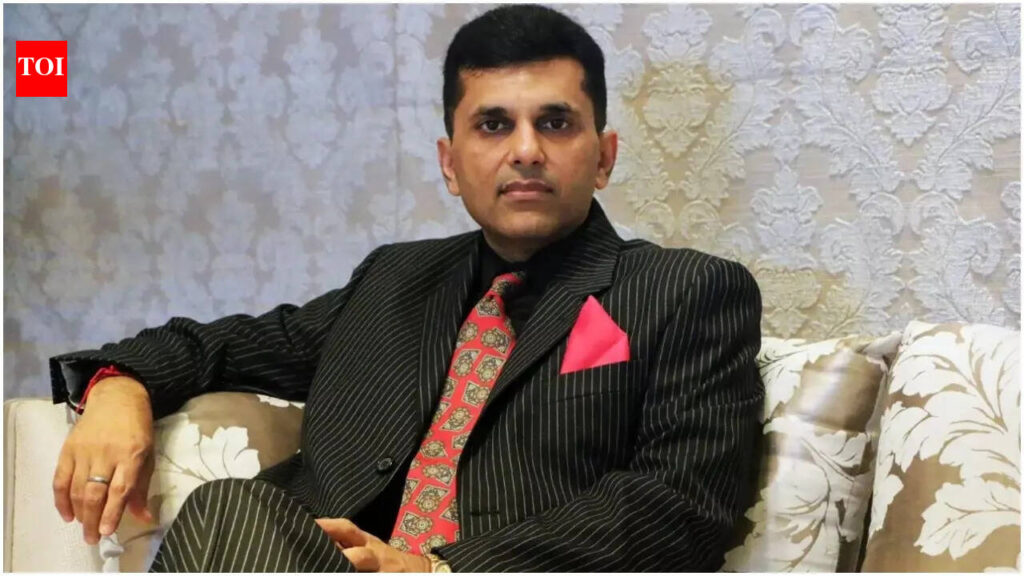

Producer Anand Pandit has given us films like Akshaye Khanna’s ‘Section 375’, Saif Ali Khan’s ‘Bazaar, Amitabh Bachchan’s ‘Sarkar 3’, Ajay Devgn’s ‘Total Dhamaal’, Abhishek Bachchan’s ‘Big Bull’, and Emraan Hashmi‘s ‘Chehre’, and more. And recently, he opened up about the evolution of patriotism in Indian cinema. To express his thoughts, he penned a blog for Etimes. Let’s take a look at it.Anand Pandit shares,One song, and how it stirred the patriotic emotions of an entire nation! Indian cinema’s association with patriotic storytelling can be traced to the 1940s with the film ‘Kismet’ (1943). The whole film was not built around nationalism, but it has some hidden intent. Director Gyan Mukherjee interwove the spirit of freedom into the narrative while the country remained under British rule through the song ‘Door Hato O Duniya Walon, Hindustan Hamara Hai.’The song initially escaped colonial censorship. But once the authorities recognized the meaning embedded in Kavi Pradeep’s lyrics, they even attempted to restrict the film. An arrest warrant was issued against him on charges of sedition, compelling him to go underground.The public response, however, was striking. Film historians record that audiences were so moved that theater operators often rewound the reel on request to replay the song. That moment marked the beginning of a legacy that Indian cinema continues to uphold.Then, independent India witnessed a steady stream of patriotic films that portrayed the country’s freedom struggle. ‘Shaheed’ (1948), written and directed by Ramesh Saigal and starring Dilip Kumar and Kamini Kaushal, was among the early examples. Years later, another film with the same title, ‘Shaheed’ (1965), directed by S. Ram Sharma, presented Manoj Kumar as Bhagat Singh, honoring the revolutionary as a true martyr. No account of this phase is complete without ‘Mother India’ (1957), a film many scholars regard as a defining image of the young nation, shaped by both colonial and nationalist interpretations.The wars of the 1960s, the Chinese invasion of 1962, and the conflict with Pakistan in 1965, followed by another war in 1971, shaped the national mood. These events brought public attention to the courage, duty, and sacrifice of the armed forces, and naturally, many movies based on military themes followed, such as ‘Haqeeqat’ (1964), ‘Hindustan Ki Kasam’ (1973), and ‘Akraman’ (1975), to name a few. Even in later years, ‘Prahaar: The Final Attack’ (1991), ‘Border’ (1997), ‘LoC Kargil’ (2003), and many others followed this trajectory, elevating the standing of the armed forces in the public imagination.India has also witnessed major biographical films such as ‘Gandhi’ (1982), directed by Richard Attenborough; ‘Dr. Babasaheb Ambedkar’ (2000), centered on the chief architect of the Indian Constitution; and ‘Bose: The Forgotten Hero’ (2004). These works draw from documented history, relying on research and factual accounts rather than fiction.Gradually, the focus in patriotic cinema moved from characters grounded in social or national struggles to figures defined largely by personal bravery and battlefield valor. At the same time, some films offered a broader reading of patriotism too. ‘Chak De! India’ (2007), for instance, framed it as unity, rising above regional divisions and prejudice in the interest of the nation. Through Shah Rukh Khan’s Kabir Khan, the film gave a strong message of inclusive patriotism.Meanwhile, some other films underlined that political independence alone did not resolve the country’s concerns. ‘Swades’ (2004) illustrated this through Mohan Bhargava’s return from NASA and his decision to build a hydroelectric project in a village. Here, love for the country took the form of participation and responsibility rather than rhetoric.In between, films such as ‘Rang De Basanti’ (2006) presented another dimension. They reshaped the idea of national commitment by arguing that patriotism is not blind obedience but the courage to question authority. It treated citizenship as an active duty, not a passive sentiment.When we speak of ‘Chak De! India,’ we must also consider the link between sport and national pride that several films explore. Hockey took center stage in Chak De!, while ‘83’ (2021) revisited India’s first Cricket World Cup victory under Kapil Dev. That triumph marked the beginning of the country’s enduring bond with the sport, a connection that continues to engage even younger generations.Cinema’s influence, however, has changed with time. The aim of invoking collective feeling often gives way to celebrating individual heroes. Storytelling methods, too, vary across decades. While earlier films centered on national integration and anti-colonial themes, recent narratives tend to be more hero-driven. Commercial considerations play their part; cinema is, after all, a business and not a documentary form. Yet the balance remains important. Patriotic storytelling must rely on honesty rather than manufactured spectacle.Recent works such as ‘Shershaah’ (2021), ‘Ikkis,’ and ‘120 Bahadur,’ which recount the Battle of Rezang La, revisit lesser-known acts of courage and honor soldiers. The Tamil film ‘Amaran’ (2024) also received appreciation for its grounded and credible portrayal.High production values now help war dramas reach wider audiences, with films like ‘Dhurandhar’ (2025) showing their commercial potential, even as fictional elements are introduced for narrative appeal.Ultimately, each generation interprets patriotism in its own way. Cinema reflects these shifts while continuing to draw from the same source, the memory of sacrifice, unity, and service to the nation. As long as these stories are told with sincerity, the journey of patriotic cinema will continue.