‘Stranger Thing Season 5: Will-Vecna opening scene dubbed ‘deeply disturbing’, social media users call it child abuse |
Stranger Things has always dealt in dark images: kids stalked by creatures, bodies in webs, minds taken over by forces they can’t see. The horror has usually sat in that space between sci-fi and nightmare. But the opening five minutes of Season 5 Vol. 1 have triggered a very specific debate that goes beyond “that was scary” and into “what exactly did we just watch?” The new season begins by returning to the night Will Byers disappeared in 1983. Instead of only hinting at what happened in the Upside Down, the premiere lays it out in full, showing not just the Demogorgon but Vecna himself stepping into that moment. The intention is clear: to explain why Will was taken, how his connection to the Upside Down began, and how Vecna’s larger plan started with him. What the show probably did not expect is that this explanation would itself become the subject of controversy, with some viewers accusing the scene of implying child assault, and others just as firmly insisting that it is nothing more than a villain establishing psychic control.
Inside the opening scene: Will, Vecna and the “first vessel”
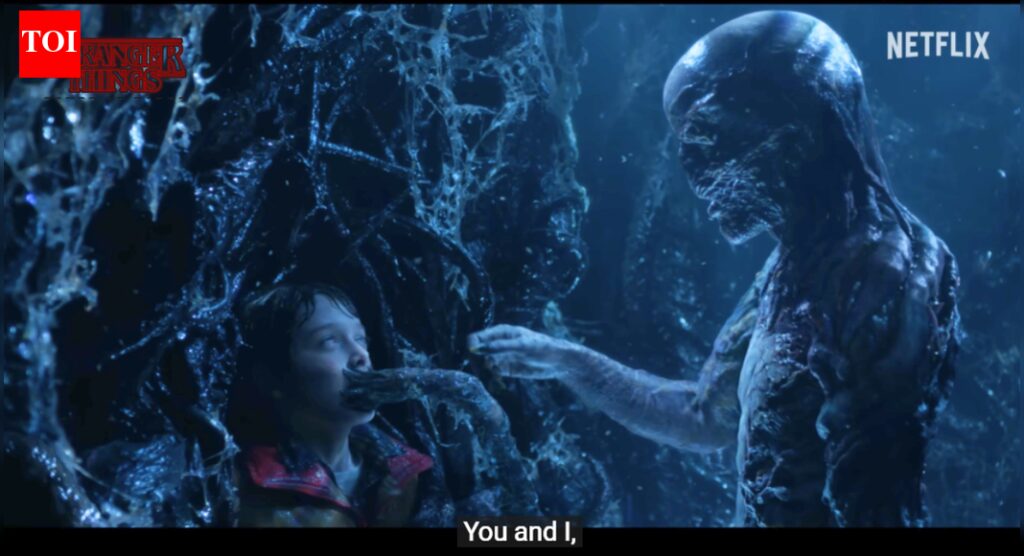
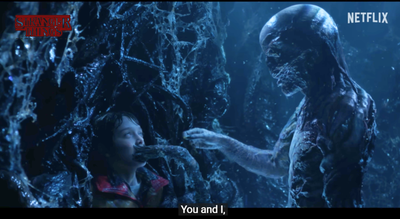
The scene, released as a teaser ahead of the season and used to open the premiere episode “The Crawl”, begins with young Will hiding in Castle Byers deep inside the Upside Down forest, softly singing Should I Stay or Should I Go to himself. A Demogorgon crashes through the hut, forcing him to flee into the twisted woods. He climbs a tree, jumps in desperation, falls hard, and is dragged away into the Upside Down version of the Hawkins Public Library – the same place Joyce and Hopper later find his body suspended at the end of Season 1. This time, the camera stays with Will. He hangs unconscious, wrapped in vines. The Demogorgon retreats as another presence arrives. Vecna emerges from the shadows, treating the Demogorgon almost like an underling and focusing entirely on the small boy pinned in front of him. He steps in close, studies Will’s face, strokes his forehead with his hand, and speaks:“At long last we can begin. You and I, we are going to do such beautiful things together, William.”
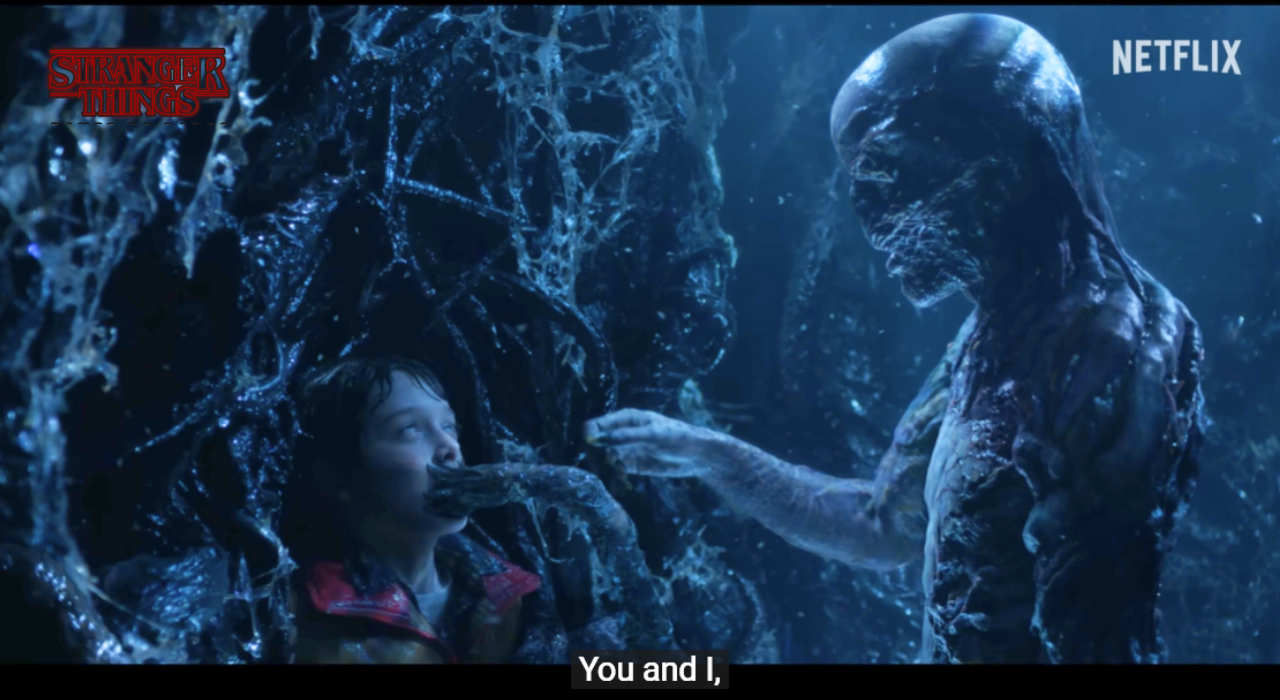
Will-Vecna encounter Stranger Things Season 5/ Screengrab Youtube
As he says this, a vine extends towards Will’s mouth. It pushes past his lips and down his throat. Will’s body convulses as dark particles or fluid are pumped into him. This is not an attack that kills him; it is an implantation. The sequence is designed to show what later dialogue confirms: that Will is being seeded as Vecna’s “first vessel,” the initial bridge between the Upside Down and the human world.
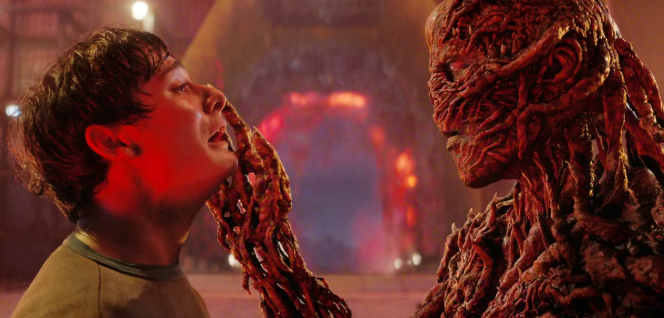
Screengrab/Netflix
Elsewhere in the season’s exposition, Vecna explains that taking Will first showed him what was possible – that a child’s mind could be manipulated and broken, and that a host body could serve as an anchor point. Will is described as the test case that taught Vecna how to control others. The goal is not just one boy. His plan involves twelve “perfect vessels” whose possession would allow him to fully reshape the world. The four gates already opened in Hawkins are part of that larger design; Will’s infection is revealed as the first step in a much longer chain of events. So on a story level, the scene does several things at once: it ties Season 5 directly back to the very beginning, it clarifies why Will has always been psychically linked to the Upside Down, and it establishes Vecna as an active architect of that link from day one. The controversy arrives from the way those ideas are visualised.
How viewers are reacting: discomfort, defence and complete disbelief
Reaction to the scene online has been sharply split. Some viewers have described the imagery as disturbing in a way that feels uncomfortably close to real-world abuse. Others say they didn’t read anything like that at all, and are frustrated that the sequence is being described in sexual terms. A number of users on X said they were blindsided by the discourse because their own reading was straightforward horror. One wrote, “Lol, I didn’t even think of it like this when I saw it.” Another said simply, “I didn’t feel that watching.” Others argued that the issue lies more with how people are interpreting it than with what is on screen: “People are just wrong minded. It is not what they think!” Several comments defended the moment as genre-typical. One compared it to other fantasy franchises, asking, “how is it any different than dementors sucking life out of humans?” Another emphasised the intended audience and tone of the programme: “Stranger Things is NOT for kids. And as weird as that opening scene is it’s not a r*** scene. And Vecna is a bad guy whom the audience is supposed to root against.” Others went further, saying “The ppl making it sexual are the weird ones….” On the other side, some viewers saw the mouth invasion, the physical restraint and the dialogue about “beautiful things” as crossing a line. One user wrote, “These evil minds will not call it r*** but beautiful scenes together like this beautiful scenes – when one is an age child, and another is a monster, giving his body part in his mouth.” Another announced they were done with the season entirely: “I will now not watch it. Period. Can’t support that. There is never a reason to depict anything remotely like that with children. Not artistic. Not scientific. It’s pure garbage.” The controversy deepened when conservative activist Jack Posobiec framed the scene in explicitly abusive terms on social media.A Community Note on X later flagged his specific allegation as “completely made up,” pushing back on claims that went beyond what the footage actually shows. That correction did not end the discussion, but it drew a line between what is literally depicted and how far some commentary was extrapolating it. In the middle are viewers who acknowledge that the scene is meant to be disturbing, but do not agree with calling it an assault. For them, the horror sits in Vecna’s style of control: he infects, puppeteers and mentally cages his victims. Will is simply the first. Those users argue that while the imagery is dark and invasive by design, it remains within the bounds of supernatural horror rather than stepping into explicit real-world territory.
Why the same scene is landing so differently
The disagreement here doesn’t come out of nowhere. It sits at the intersection of several elements: visual language, character vulnerability, and how horror traditionally shows invasion and control. First, Vecna is not an animalistic creature. He is humanoid, expressive, and physically precise. When he touches Will’s forehead, it is deliberate. When the vine enters Will’s mouth, it is not a claw or a bite, but a tendril pushing inward. The camera lingers on the act of insertion and on Will’s physical reaction as his body convulses. This is standard visual shorthand in genre storytelling for possession, parasitic infection or psychic takeover. The vine is there to “seed” him with a substance from the Upside Down so he can be used as a vessel and a bridge, not to harm him in a sexual sense. But the imagery is intimate and invasive enough that some viewers’ minds go to places the story itself never names. Second, Will is a child in this sequence. He is unconscious, bound, and completely powerless. Vecna is an adult figure, towering over him, speaking in soft, almost coaxing lines like “we are going to do such beautiful things together.” For many, that reads as a villain’s theatrical menace. For others, those lines, in combination with the physical staging, echo grooming language, even if that was not the intent. The asymmetry of power – one child, one powerful humanoid monster, a restrained body and an invasive act – is enough to trigger discomfort for some viewers regardless of context. Third, Stranger Things has always used themes of violation and control. The Mind Flayer occupying Will in previous seasons, the “meat puppet” qualities of possessed hosts, the way Vecna preys on trauma and guilt – none of that is new. What is new here is how explicitly the origin of that link is shown, and how focused the camera is on the mechanics of it. Earlier seasons usually cut around the worst moments or framed them at a slight distance. This time, there is no cutaway; the audience watches the seed being delivered. Age ratings also frame the discussion. Season 5 carries similar warnings to the later previous seasons, but in some regions the classification has been tightened. In the UK, the BBFC lists a 15 certificate for “sex, sex references, violence, injury detail, discrimination, threat, and horror.” In the US, Netflix has used TV-14 with notes on “disturbing images, fear, gore, language, and smoking,” and some outlets report that Season 5 edges towards TV-MA in tone. Parent guides consistently stress that the show is not aimed at children, even though many younger teens watch it. Put together, it becomes easier to see why reactions diverge. Viewers who are used to horror’s imagery of possession and parasitism tend to file the scene under “monstrous invasion” and move on. Others, more sensitive to how bodies and power are framed, see echoes of something else, even if they accept that it was not meant to be literal. And a third group simply does not register anything beyond “this is creepy” until someone else points out a different reading. At the time of writing, neither Netflix nor the Duffer Brothers have issued a specific comment on the opening sequence or the interpretations circulating around it. What is clear is that the scene has managed to do more than just answer an old mystery about Will’s disappearance. It has also exposed how differently audiences can read the same images, especially when a child, a monster and the language of bodily invasion are all in the frame at once.