Kolkata Literary Festival Unites Music and Literature with Usha Uthup and Madhabi Mukherjee |
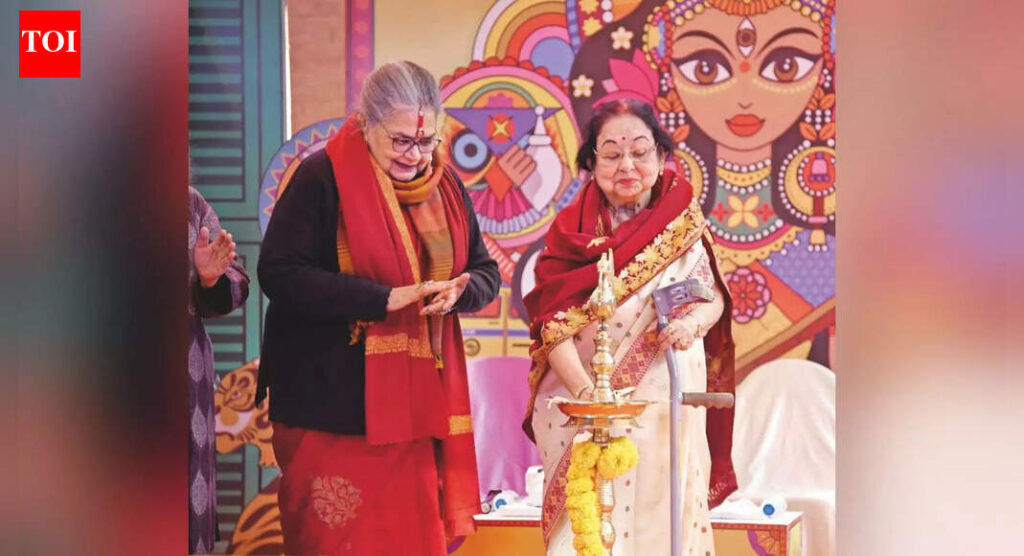
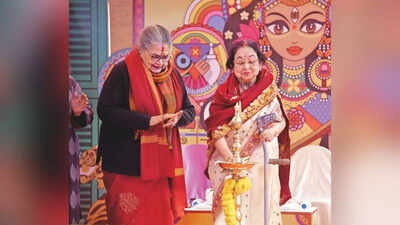
Friday morning at Alipore Museum marked the inauguration of the Kolkata Literary Festival. The inaugural session was attended by veteran artistes Usha Uthup and Madhabi Mukherjee alongside festival director Anjum Katyal, programming head Neeta Sreedharan, and Alipore Museum director Jayanta Sengupta. While Usha Uthup highlighted the shared language of literature and music, Madhabi reflected on her formative years and landmark films. The session ended with a spirited medley of Shaan and Ramba Ho. Edited highlights from the adda.‘Music and books share a deep bond’Usha Uthup: For me, every song I sing must leave an impact on the audience. I am a people’s person, and through my singing I try to share that connection every time. Whenever I sing, I want to convey a story – joy, happiness, sorrow, or struggle – and it must always carry some meaning. My aim is to bring a smile to the audience’s face, which is why I choose songs with lyrics that speak deeply and touch hearts.I think books and music share a strong bond. While books narrate stories through chapters, music tells them through verses. When I sing “Humein tumse pyaar kitna, yeh hum nahin jaante, magar jee nahin sakte tumhare bina,” I am not just singing words but sharing a journey of emotions.‘Ritwik da taught me the craft of cinema’Madhabi Mukherjee: I remember Ritwik da as a complete filmmaker who understood acting, direction, and music deeply. Despite gruelling conditions and simple meals, we created lasting classics. Generous yet unpredictable, he could be warm on set, but after drinking, his moods often changed. Working on his sets meant enduring far tougher conditions than today, yet his films remain classics. He instilled in us a deep love for the craft. His sets were disciplined and affectionate but firm, and he never hesitated to correct us for our growth.
Few know Ritwik Ghatak was also a fine actor, deeply involved in theatre and highly knowledgeable about music
Madhabi Mukherjee
‘The aroma of books takes me to a different world’Usha Uthup: Literature festivals celebrate the written word by bringing stories to life and forging meaningful connections between authors and readers through talks, workshops and interactive sessions. In a screen-dominated digital era, they encourage reading habits and draw people away from phones and mindless scrolling. Even today, the aroma of new books in a bookstore transports me to another world. Despite a busy schedule, I long to read more real, lived stories, knowing that reading remains an enduring gift for the mind and well-being.
When you sing a song, you express emotions and personal experiences to the listener, creating a beautiful exchange that calls for deep interaction between the two
Usha Uthup
‘Kanan Devi had a golden heart’Madhabi Mukherjee: Kanan Devi was not only a remarkable actor and singer but also a woman with a golden heart. Widely remembered as Bengali cinema’s first true star, her grace extended beyond the screen. At a time when society was far from progressive, she became the first president of Mahila Shilpi Mahal, supporting senior female artistes and charitable causes. Even when principles clashed with internal disagreements, she worked tirelessly for the greater good. I deeply admire her strength, integrity, and enduring mentorship.‘Chhabi Biswas turned my mistakes into lasting lessons’Madhabi Mukherjee: I began acting at just four, stepping in a play named Seeta by Sisir Kumar Bhaduri when an artiste fell ill. My mother urged him to cast me, and perhaps my innocent expression convinced him. My first role was as an ashram balika. Soon after, at Prabha Devi’s insistence, I joined Minerva Theatre, spending a decade learning discipline with stalwarts. Working with Chhabi Biswas was a turning point. I once forgot my lines, and the way he guided me has stayed with me. My journey has been shaped by my teachers and the audience.
Ritwik da loved playing chess but hated losing. I played well but ensured our game ended in a draw to avoid his fury
Madhabi Mukherjee