In this Indian city the water is so clean that one can drink it straight from the tap |


In the coastal town of Puri in Odisha, known for its centuries-old Jagannath Temple and annual Rath Yatra that draws millions of pilgrims, a quiet revolution in civic infrastructure took place when the rest of the world was fighting COVID-19 pandemic. As per the Housing & Urban Development Department, Govt. of Odisha’s post on social media on October 13, 2020, the Government of Odisha’s Sujal – From Tap Mission was launched. The city of Puri formally embarked on a path on Oct 13, 2020 that many urban centres in India still strive toward, that is, providing tap water that residents and visitors can drink directly without needing to boil or filter it first.
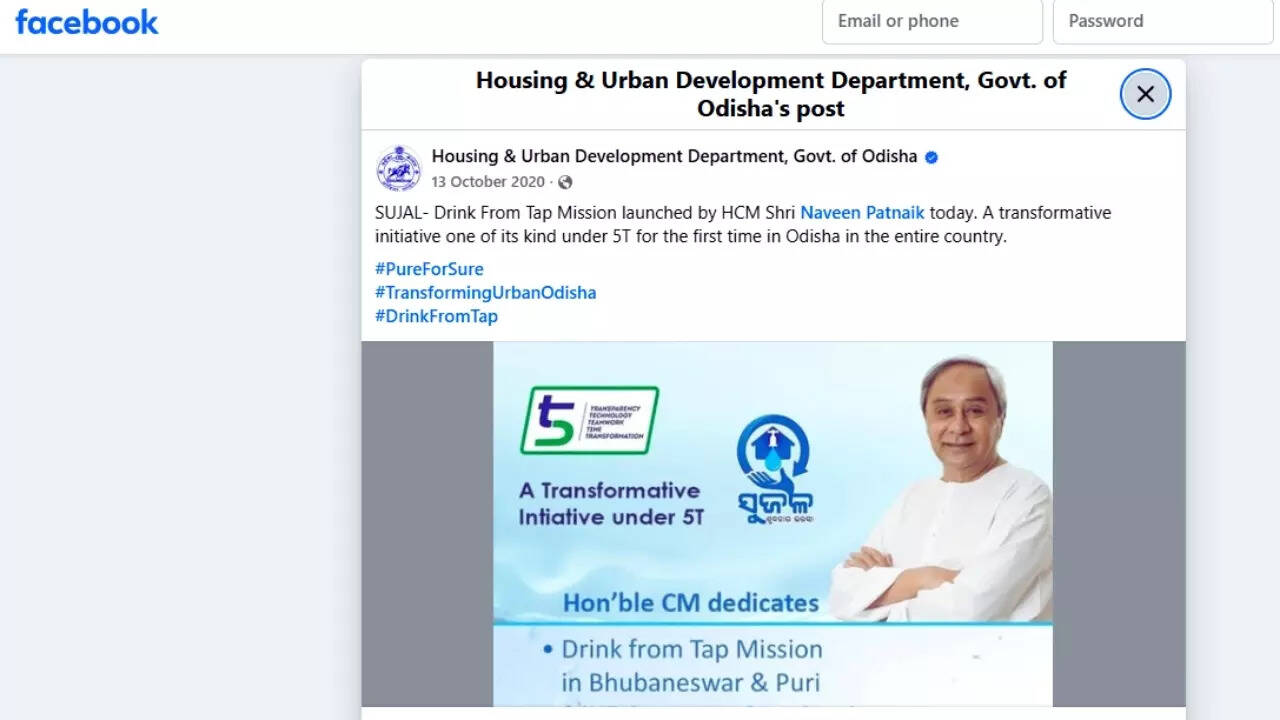
Housing & Urban Development Department, Govt. of Odisha’s post
Long before Puri became synonymous with this modern convenience, drinking water in Indian cities typically required some form of household treatment, whether by boiling or filtering, because municipal supply systems often did not meet safe drinking standards. This has made bottled water a near necessity for travellers and locals alike across much of the country. However, in a place like Puri, which combines its religious past with holidays on its famous beach, easy access to safe drinking water is a major boon to anyone who finds themselves wandering its narrow streets or lazing on its coast.The “Sujal – Drink From Tap” Mission was inaugurated by the Government of Odisha on 13th October 2020, with the objective of supplying good drinking water that could be safely drunk from the tap to the urban households. Under this initiative, the state invested in upgrading water treatment and distribution infrastructure across several urban centres, with Puri and Bhubaneswar identified as pilot areas in the first phase.
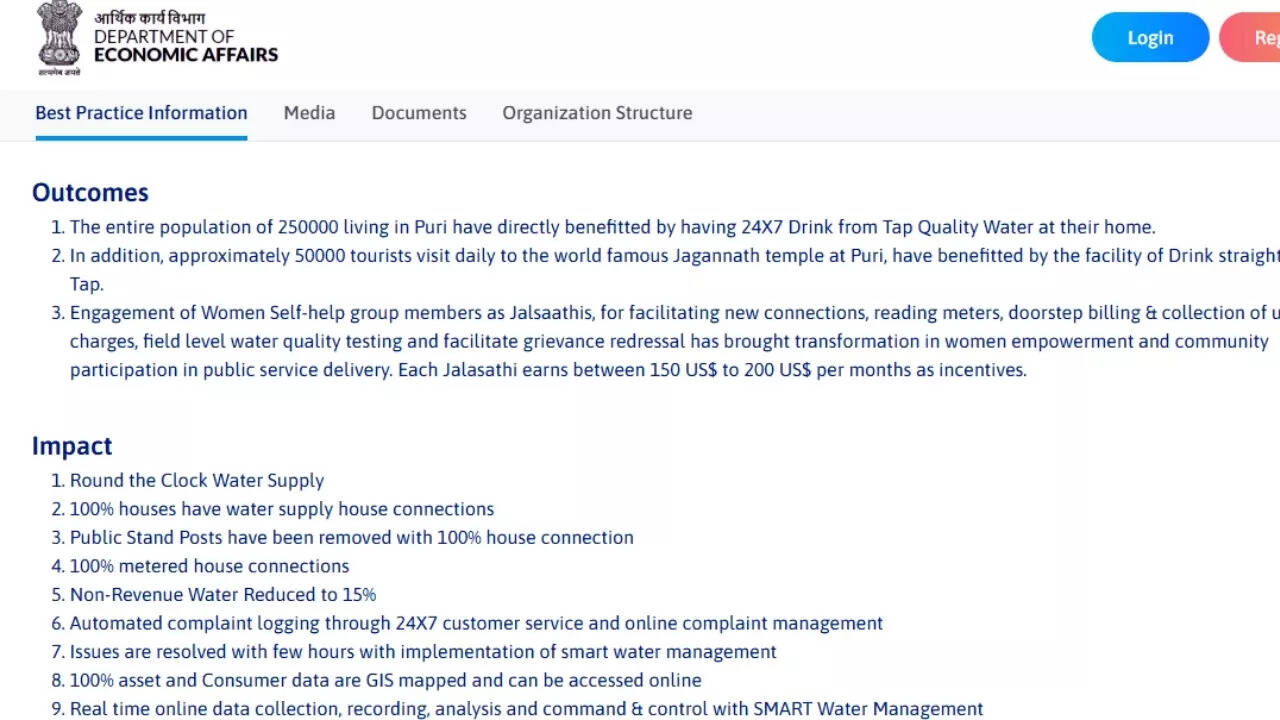
Department of Economic Affairs, GOI
Continuous monitoring systems have come into use for ensuring that water retains safe characteristics as it travels from treatment plants to household connections and street fountains, thereby enabling authorities to maintain compliance with recognised drinking water benchmarks.
Department of Economic Affairs disclaimer
For a traveller arriving in Puri today, this shift in basic infrastructure has practical benefits. Instead of buying large quantities of bottled water or relying on hostel filters, one can fill a reusable bottle straight from a hotel or guesthouse tap. Public points of water and fountains nowadays provide easy access to potable water in many parts of town, especially near busy walkways and tourist spots. This not only eases travel inconveniences but also goes along with sustainable ideas by limiting plastic waste, one of the ongoing struggles in tourist spots where plastic waste is very substantial.Locals have experienced tangible changes too. In markets, residential neighbourhoods and community centres, water that meets recognised safety standards flows reliably throughout the day and night. Where earlier households might have had intermittent supply or water of uncertain quality, the upgraded piped network now extends 24×7 in many parts of the municipal area. Such continuity not only makes life easier for citizens but also helps with public health because it makes them less reliant on other water sources that may be dangerous.Beyond the issue of convenience, the implications of this infrastructural development are numerous: water from the tap is a central part of public health since it eliminates the chances of developing waterborne diseases, in addition to relieving the domestic burden that previously had to invest in purification. The assurance of supplying safe drinking water makes Puri a more preferable destination for tourists, thereby making it an even more preferred destination for the millions of devotees who throng the city every year. Pilgrims on long walks through the city’s lanes no longer need to juggle bottles and jugs; they can stay hydrated without distraction.Puri’s success in the Sujal Mission also has symbolic significance. Being one of India’s most celebrated temple towns, associated with UNESCO’s cultural hubs, it is significant that Puri was able to deliver safe tap water, thereby setting a precedent for other cultural hubs in India that are heritage sites.The state government’s plan anticipates that continuous potable tap water will become the norm across other cities and towns in Odisha, extending the same quality standards to places that vary in size and population.For travellers, the lesson is straightforward: visiting Puri today offers not only a journey into spiritual and cultural heritage but also the comfort of modern urban amenities. When you fill your bottle at a tap in this coastal town, you’re holding water that is part of a carefully planned public service initiative, not an uncertain guess. It’s a small, everyday convenience that reflects a larger commitment to improving quality of life, and it’s one of those travel details that quietly enhances your experience without ever demanding much attention.