Epstein Files and Stanley Kubrick: What is the Eyes Wide Shut conspiracy theory about elites? | World News

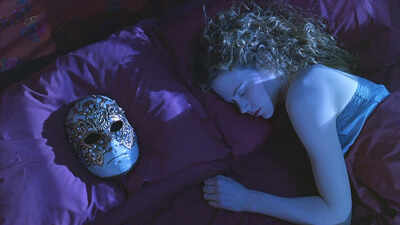
Every few years, Stanley Kubrick dies again. Not in reality — in the imagination of the internet, which keeps resurrecting him as a martyr every time it rediscovers Eyes Wide Shut and decides the film was not art, not allegory, but a warning.This latest revival arrives via a viral X thread built around a familiar clip from Eyes Wide Shut: masked elites, ritualised menace, and a caption doing all the heavy lifting — They killed Stanley Kubrick. It is the kind of post that does not argue, does not explain, and does not need to. In the Epstein era, implication has replaced evidence.
What the thread is really selling is not a claim about 1999. It is a mood about now. A belief that the powerful do unspeakable things behind closed doors, and that anyone who shows us the door gets removed from the building.The conspiracy begins with timing, then gets promoted to theologyKubrick died of a heart attack on March 7, 1999, aged 70, days after screening what he described as the final cut of Eyes Wide Shut for the studio. That is the factual core.Everything else is architecture built on proximity. A few days becomes too close. A heart attack becomes convenient. A final cut becomes unfinished truth. Kubrick — already mythologised as secretive, obsessive, and distrustful of studios — becomes the perfect protagonist for suspicion because he does not feel like a man who simply dies. He feels like a man who is stopped.The villain, inevitably, is Warner Bros., accused of panicking after Kubrick’s death and excising scenes that supposedly exposed elite sexual rituals, child sacrifice, and organised depravity. No scripts. No verified footage. No paper trail. Just vibes, passed around as certainty.
What Eyes Wide Shut actually is
Strip away the internet’s interpretive gymnastics and Eyes Wide Shut is something far less sensational and far more Kubrickian.It is not an exposé. It is an erotic psychological drama about class, access, jealousy, and humiliation. The masked ritual is not a documentary insert. It is allegory — Kubrick doing what he always did: using spectacle to show how power behaves when it is unaccountable.The horror does not come from what is shown, but from how it is shown: the calmness of authority, the politeness of menace, the certainty that rules exist you will never be allowed to read. Kubrick was never interested in naming villains. He was interested in systems.
What the film is actually about
At its core, Eyes Wide Shut follows a wealthy New York doctor whose marriage is destabilised when his wife calmly admits she once fantasised about another man. It is not infidelity that unravels him, but the discovery that desire exists beyond his control. Shaken, he spends a night drifting through the city, pulled into a chain of sexual encounters and near-encounters — prostitutes, intermediaries, coded invitations — until he infiltrates a masked gathering in a mansion where sex, power, and hierarchy are ritualised into theatre.At each stop, the illusion of choice dissolves. He believes he is participating. He is merely tolerated. When he is identified as an outsider, the response is not violence but certainty. He is warned to forget. By morning, he returns to domestic normalcy chastened, aware that the world he briefly glimpsed is real, ordered, and utterly indifferent to him. The film is not about sex so much as humiliation — the humiliation of learning that privilege has limits, and that beyond those limits lie rooms you are not meant to enter, even if the door briefly opens.
The Rogan clip that reignited the myth
The latest surge owes much to a resurfaced podcast clip featuring Roger Avary, one of the credited co-writers on Eyes Wide Shut, speaking on The Joe Rogan Experience.Avary suggests that post-production decisions were taken after Kubrick’s death. That is unremarkable. Films are finished this way all the time. What Avary does not claim is that the studio removed scenes depicting child sacrifice, elite pedophile rings, or satanic cults. Those details are supplied later by the audience, not the speaker.Conspiracy culture thrives on ellipses. A pause becomes proof. A maybe becomes a manifesto.
Enter Epstein, and everything becomes “evidence”
The Kubrick theory did not originate with Jeffrey Epstein — but Epstein transformed it.Once Epstein’s crimes became public, something broke in the collective imagination. The comforting assumption that elite abuse could not exist at scale collapsed. The idea that “they would never get away with it” stopped sounding naïve and started sounding dishonest.From that moment on, fictional depictions of elite depravity were reread as confessions. Eyes Wide Shut became prophetic. Kubrick became a whistleblower. Epstein became the missing footnote. The ritual scene became evidence. And every unanswered question became confirmation of suppression.The problem is mundane but fatal to the theory: Epstein’s crimes were real and documented. Eyes Wide Shut was adapted from a novella written in 1926. The overlap is emotional, not evidentiary.
The similarities that fuel the myth
Where the conspiracy gains traction is not in facts, but in aesthetics and structure. The parallels are visual, social, and psychological — enough to feel uncanny without being causal.First, there is the geography of power. In Eyes Wide Shut, the ritual takes place in an isolated mansion, accessible only through invitation and compliance. Epstein’s world, as later revealed, operated through similarly controlled spaces: private islands, gated townhouses, aircraft with restricted passenger lists. Power, in both cases, is not loud. It is secluded.Second, there is the language of hierarchy. Kubrick’s ritual is less about sex than about rank — who wears which mask, who speaks, who is allowed to stay. Epstein’s operation functioned through comparable ladders: recruiters, intermediaries, facilitators, patrons. Proximity to power determined immunity.Third, there is the mechanism of silence. In the film, the protagonist is not threatened with death so much as erasure. He is told, calmly, that forgetting would be wise. Epstein’s influence rested on similar dynamics: legal intimidation, reputational pressure, non-disclosure, and the quiet assurance that consequences flow in only one direction.Finally, there is the illusion of choice. Kubrick’s characters believe they are acting freely until they realise the rules were written long before they arrived. Accounts from Epstein’s orbit describe a comparable trap — consent blurred by manipulation, dependency, and asymmetry.These similarities are real enough to unsettle. They are also broad enough to be universal. This is how power often looks, whether in fiction or in life.
What people mean by “the Epstein files”
When people say “the Epstein files”, they are usually referring to a debris field rather than a single smoking gun: court filings, depositions, contact books, flight logs, schedules, emails, photographs, investigative materials, and later releases that arrive piecemeal and often out of context.Two things can be true at once. Epstein cultivated proximity to powerful people. Proximity, by itself, is not proof of participation in his crimes. The internet hates that distinction.
The instances that get weaponised
Consider the recurring claims that “the files confirm everything”.There are unsealed court materials that name public figures, often as part of witness testimony or third-party references. Names appearing in documents are repeatedly treated as convictions rather than context. There are contact books that resemble address directories, which get rebranded online as “client lists”. There are flight logs that show who travelled with Epstein, which are then treated as proof of criminal involvement regardless of timing, purpose, or corroboration.There are also email caches and schedules that reveal something more prosaic and more unsettling: Epstein’s skill at networking. He placed himself among academics, politicians, financiers, and celebrities by offering access, money, and introductions. That social proximity looks conspiratorial when collapsed into screenshots. In reality, it often reveals opportunism rather than orchestration.And then there are the administrative failures — redactions missed, documents released and reprocessed — which fuel the idea that something vast is being hidden, when what they often demonstrate is institutional mess.This is the key problem. Partial visibility plus moral outrage produces maximum misinformation.
The adrenochrome detour
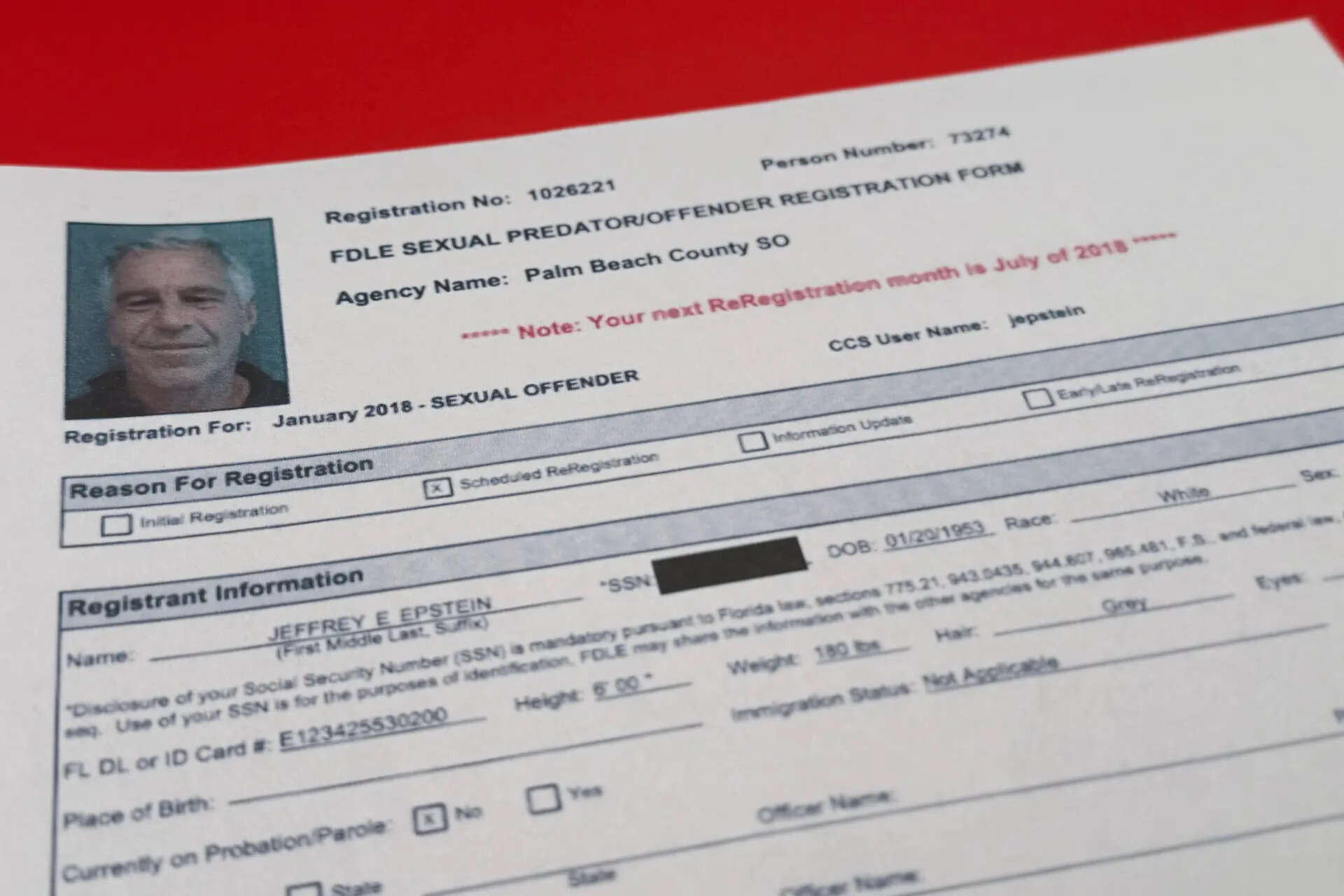
A document that was included in the U.S. Department of Justice release of the Jeffrey Epstein files, photographed Monday, Feb. 2, 2026, shows Epstein’s Florida sexual predator/offender registration form for July 2018. (AP Photo/Jon Elswick)
Once Epstein is invoked, the narrative often slides into adrenochrome harvesting and satanic rites — claims with no evidentiary basis, recycled from older conspiracy traditions and given a modern aesthetic.At this point, the Kubrick myth stops pretending to be about Kubrick and becomes a delivery mechanism for something older and darker. The ritual scene becomes a Rorschach test. Those predisposed to believe in hidden cabals treat cinema as surveillance footage. Those familiar with Kubrick treat it as symbolism, nightmare logic, and class anxiety rendered as theatre.Both groups are watching the same frames. Only one insists it is journalism.
Why this theory refuses to die
The Kubrick–Epstein myth survives because it is perfectly optimised for the internet. Kubrick himself invites it. He was secretive, meticulous, and famously distrustful of studios. Eyes Wide Shut denies closure. It ends not with revelation, but with discomfort. Power remains intact, and that irritates people. And Epstein permanently altered the conspiracy landscape. After him, elite criminality no longer sounds implausible. Everything unsettling gains retroactive credibility. But plausibility is not proof. Suspicion is not scholarship.
The unglamorous truth
There is no credible evidence that Stanley Kubrick was assassinated. There is no verified evidence that Eyes Wide Shut originally contained scenes of child sacrifice or a literal depiction of an Epstein-style trafficking ring. There is also no need for any of that to be true for the film to feel disturbing.Kubrick’s point survives without the martyr myth. Power is opaque. Access is controlled. The elite operate by rules they do not explain to those beneath them. That is not a secret. That is sociology.The internet prefers the version where the director becomes the sacrifice, because that version flatters the audience. If Kubrick was killed for revealing “the truth”, then watching the clip makes you brave. If Kubrick was simply making art about class and desire, then watching the clip makes you a person on your phone.And that is a far less cinematic role.


