Earth’s ‘cold’ sibling? NASA’s old telescope finds Earth’s cold-twin planet 146 light-years away!
Is there life beyond Earth?This is one of the most intriguing questions that has been floating for decades now.NASA scientists recently discovered an exoplanet, which is being called the ‘cold Earth.’Found via a single transit in NASA’s telescope Kepler’s K2 data and published in The Astrophysical Journal Letters, it shows old archives still hold secrets.
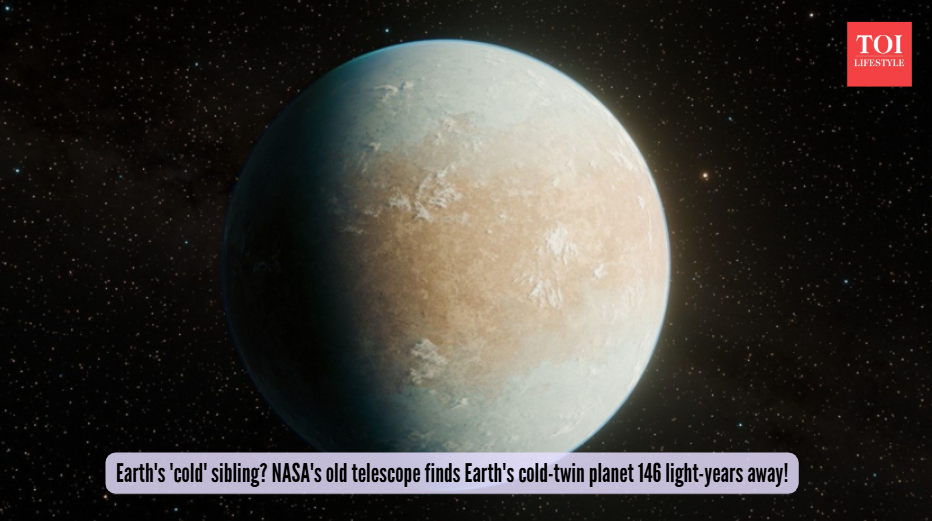
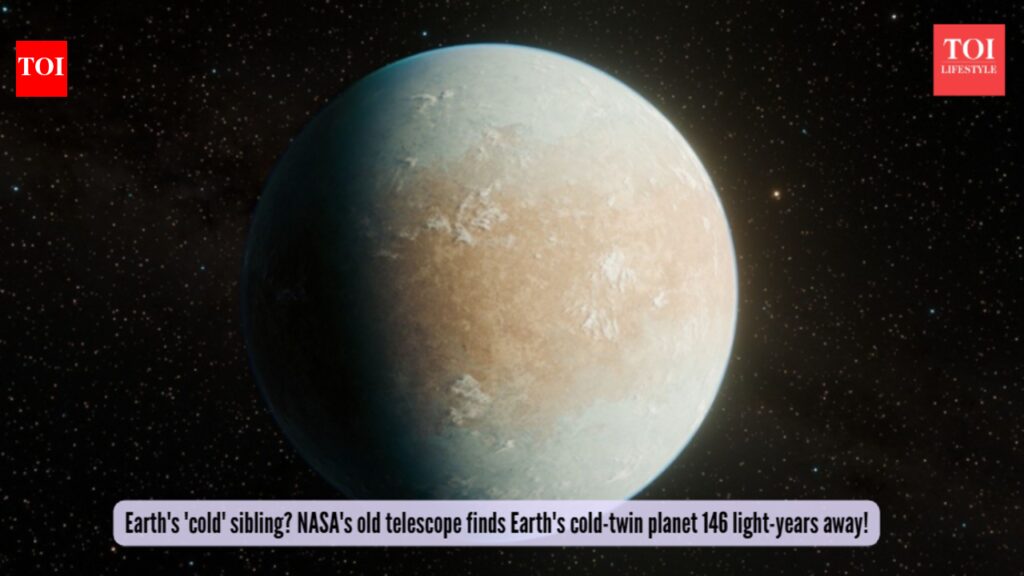
HD 137010 b Exoplanet and Earth’s cold twin (Photo: NASA)
Earth sized planet discovered from retired NASA telescope data
NASA scientists dug into retired Kepler’s K2 data from 2018 and found HD 137010 b, a single transit signaling an Earth-sized planet. Published in The Astrophysical Journal Letters (Jan 2026), it’s slightly larger than Earth, orbiting a bright K-dwarf star 146 light-years away every 355 days. The shallow signal needed high-precision checks with HARPS, Hipparcos-Gaia, and Gemini South images to confirm it’s real.Meet the ice-cold Earth!HD 137010 b sits at its star’s habitable zone edge, getting just one-third Earth’s sunlight due to the cooler host star. Equilibrium temperatures remain around -68°C, chillier than Mars’ average. Still, models give it 40-51% odds of liquid water with a CO2-rich atmosphere creating greenhouse warmth. Rocky like Earth, it’s a rare discovery, not a “hot Jupiter.”
Great spot for future telescopes
Just 146 light-years away with a Sun-like star, it’s perfect for follow-up studies. James Webb or the upcoming Roman telescope could check its atmosphere for signs of life. The year-long orbit means transits are rare, but TESS or CHEOPS might catch another glimpse. Confirmation is still pending, but other data suggest it’s real, not a false signal.

Earth- Representative Image
What is the ‘cold earth’ like?
HD 137010 b is partially similar to Earth and partially to Mars, rocky like both, with an Earth-like orbit, but frozen solid. Scientists can test if a thick atmosphere traps enough heat far from its star, sharpening habitable zone definitions. Could liquid water exist beneath surface ice? It’s possible, but there is no confirmation so far.
Power of old data
Eight years post-Kepler, “zombie data” has given treasures. Single transits are tough, but advanced analysis unlocks them. This shows archives from Hubble, Spitzer, or JWST hold undiscovered worlds, fueling exoplanet hunts without new launches.