Can Durov, or another foreigner, father kids via IVF in India?
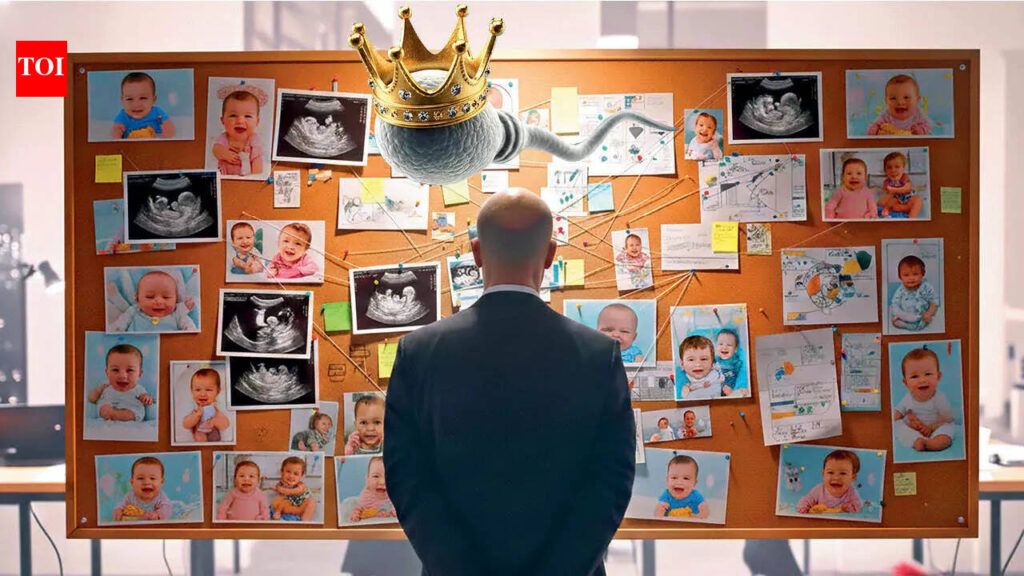
More than a decade after Vicky Donor playfully put the spotlight on the demand for “highquality” sperm, the subject has drifted far from cinema and into global discourse. This time, the conversation is being shaped not by romantic comedy but by some of the world’s wealthiest men – and by the quieter, more cautious questions that surface inside IVF clinics closer home.Over the past five years, sperm donation has entered public conversation in unexpected ways. Pavel Durov, the founder of Telegram, has said he began donating sperm in 2010, first to help a friend conceive, before moving to clinic-based donations in Moscow. According to media reports, he has since fathered more than 100 children across at least a dozen countries. In 2024, one clinic using his samples adopted an arresting pitch: “You can undergo IVF for free using Pavel Durov’s sperm – one of the most famous and successful entrepreneurs of our time.”Elon Musk, who has repeatedly warned of a looming demographic decline, has also found himself linked to discussions around sperm donation, though he has publicly denied some claims. In a United States courtroom, the Chinese tech billionaire Xu Bo spoke of his intention to father multiple children through surrogacy so that his sons could one day inherit and run his business empire. Exceptional as these cases are, they have nonetheless helped pull sperm donation out of the shadows and into the mainstream – reshaping how reproduction, legacy and choice are discussed across borders.‘Even if a foreigner on a business visa were to donate sperm in India, the identity will not be disclosed’Despite the legal clarity, gynaecologists say patients often approach the subject cautiously. “Couples do ask about donor profiling, but rarely in a direct manner,” says Dr Rupali Goyal, Obstetrician and Gynaecologist at Indraprastha Apollo Hospitals. “They may want to know about physical characteristics or background, and the basic characteristics of the profile and physical appearance may be disclosed to the recipient couple – like height, skin colour and eye colour, etc.” The sample can be utilised after a quarantine and even males from non-Indian origin can donate their semen sample. She explains how such conversations unfold in practice. “If someone on a business visa donates sperm in India, the donor is still anonymous. Patients can express preferences – for instance, asking for a foreign donor – but whether that is possible depends entirely on what samples an ART bank has. At no point can the donor’s identity be disclosed.” Doctors stress that such preferences reflect social perception.‘Patients are often unsure about what is morally and legally acceptable in India’“More informed patients do ask us almost directly whether overseas sperm can be used or whether sperm from a known person is permitted,” says Dr Manika Khanna, IVF specialist and Founder of Gaudium IVF. “These questions usually come from patients who have lived abroad or are influenced by what they read online.” According to Dr Geeta Jain, HOD (Obs, Gynae & IVF) and Co-founder of Maccure Hospital and Aastha Hospital, many patients ‘test the waters’ first. “Patients are often unsure about what is morally and legally acceptable in India. So questions are phrased very carefully, especially when they relate to donor background, genetics or origin,” she says.‘Fear of judgement, uncertainty about the law discourage patients from discussions’Doctors say stigma plays a major role in keeping these conversations private. “In India, infertility, donor conception and third-party reproduction still carry social shame,” says Dr Jain. “Fear of judgement, concerns about confidentiality and uncertainty about the law discourage patients from discussing these possibilities openly,” Dr Rupali Goyal adds that there is a lot of secrecy in this. “Strict confidentiality is maintained and in most cases couples do not wish to disclose it to other people.”‘You can’t use sperm from foreign sperm banks in India, per the current regulations’In India, sperm donation remains discreet and tightly regulated. Under the Assisted Reproductive Technology (Regulation) Act, 2021, donor identity must remain confidential, and importing sperm from foreign sperm banks that are not registered with the Indian government is illegal.“The law is very clear,” says Dr Mannan Gupta, HOD and Chairman, Obstetrics & Gynaecology, Elantis Healthcare. “Sperm obtained from foreign sperm banks will not be accepted in India for any IVF procedure. Donor anonymity is mandatory, and clinics cannot deviate from this under any circumstances.”This contrasts with countries such as the UK, Germany, Sweden and parts of the US, where donor-conceived individuals can legally access identifying information about their sperm donors.
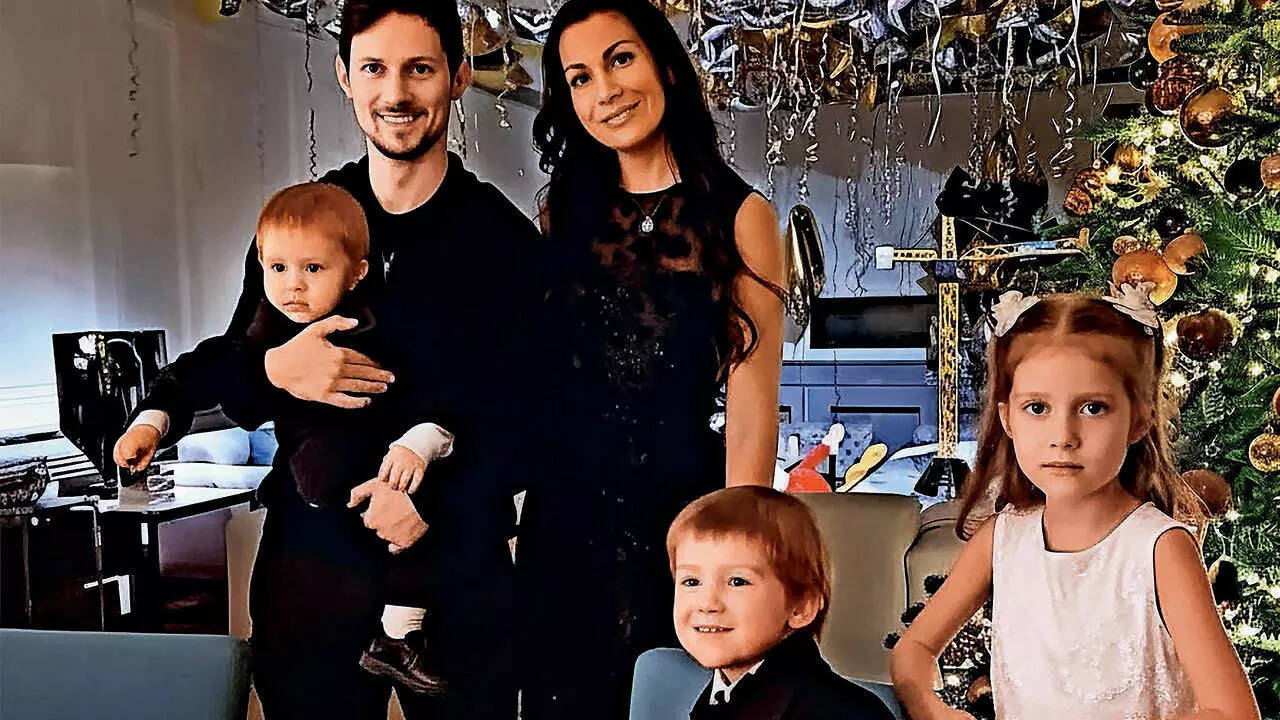
Russian-born billionaire and Founder-CEO of Telegram, Pavel Durov has pledged to fund IVF treatments for single women under 37 willing to conceive using his sperm
The unlikely world of billionaire baby-makingRussian tech mogul’s 100+ kidsRussian-born billionaire and Founder-CEO of Telegram, Pavel Durov has pledged to fund IVF treatments for single women under 37 willing to conceive using his sperm. He has also said that all of his biological children will inherit equally from his estimated $17 billion fortune. On Lex Fridman’s podcast Durov explained that inheritance would be conditional. “As long as they can establish their shared DNA with me,” he said, “someday, maybe in 30 years from now, they will be entitled to a share of my estate after I’m gone.” Durov has six known children from three women. He has also claimed to be the biological father of more than 100 additional children through sperm donation. Access to inheritance, he has said, will be delayed for three decades to encourage independence.
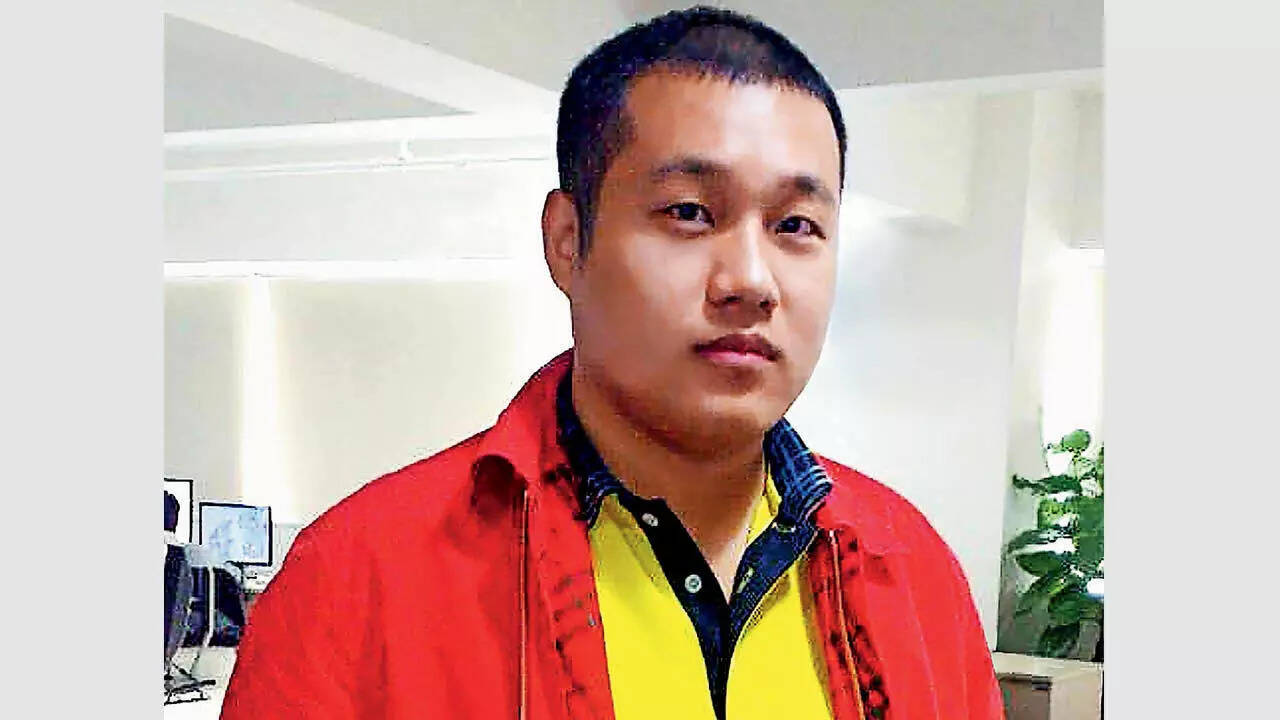
Xu Bo, a Chinese tech billionaire
Chinese billionaire with multiple US-born babiesIn a Los Angeles courtroom in 2023, clerks reviewing routine surrogacy petitions noticed an unusual pattern: the same name appearing repeatedly. The petitioner was Xu Bo, a Chinese tech billionaire seeking parental rights to multiple unborn children – while already having fathered or initiated the birth of several others through surrogacy.When Judge Amy Pellman summoned Xu for a confidential hearing, he appeared by video. Xu told the court he hoped to have around 20 US-born children – boys, he said, because they were superior to girls – who could one day inherit and run his business empire.Xu admitted he had not yet met many of the children. Some were being cared for by nannies while awaiting documentation to travel to China. His surrogacy request was denied. Still, the case reflected a growing pattern among Chinese elites who, barred from surrogacy at home, quietly pursue it abroad.
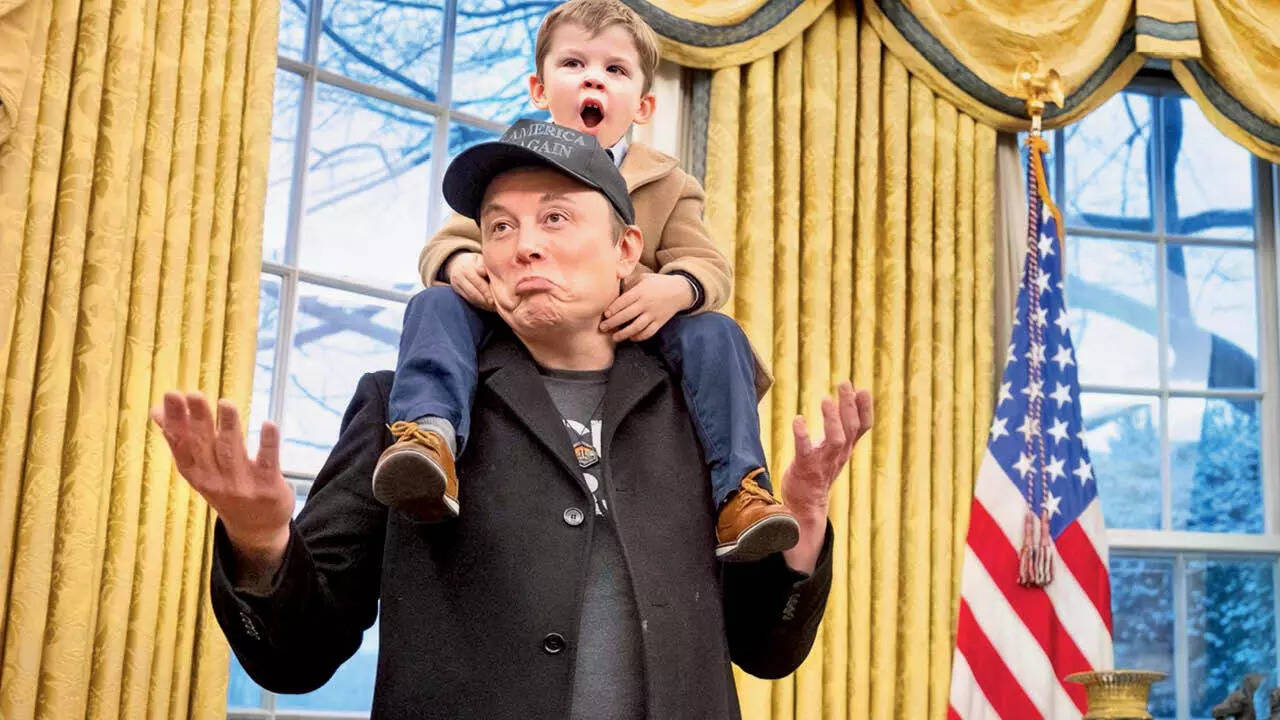
Elon Musk is aiming for Mars – and actively working on its population, one baby at a time
Beyond surrogacy: Elon Musk’s new mission, building a legionElon Musk is aiming for Mars – and actively working on its population, one baby at a time. According to The Wall Street Journal, the billionaire has been working to build a “legion” of children, using X to scout for potential mothers and even suggesting the use of surrogates to speed things up.Since 2002, Musk has officially welcomed 14 children with four different women, with Muskallegedly managing the mothers of his children through financial offers and tight-lipped confidentiality agreements.Ashley St Clair, a 26-year-old influencer who gave birth to Musk’s 13th child in 2024, said she was offered $15 million and $100,000 a month in support – on the condition she kept Musk’s name off the birth certificate and didn’t reveal he was the father. While she didn’t agree to the secrecy, she still left Musk’s name off the official documents. However, after she went public with the relationship in 2025, she claimed the monthly support was cut down to $40,000, and later to $20,000.Noting Musk’s weirdobsession, The Guardian wrote, “Is Elon Musk the dinner party guest from hell? It sure seems that way.Not only is the man desperate for people to laugh at his crass jokes, he reportedly has a weird habit of trying to donate his sperm at every opportunity.”According to a New York Times report from 2024, Musk offered some sperm, as casually as you might pass the salt, to a married couple “he had met socially only a handful of times” during a Silicon Valley dinner party.By Mannat Saini Access to donor identity is legal in these countries: Will India get there?UK Age for ID access : 18 Info provided: Full name, date of birth, last known address (for births from anonymous-ban era) Legal model: Mandatory identity release (no anonymity since 2005)Netherlands Age for ID access: 16 Info provided: Name + personal details via national register (plus non-ID info earlier)Legal model: Mandatory open-identity donor system (since 2004)Sweden Age for ID access: 18 Info provided: Identifying donor info (name, year of birth, etc.) Legal model: Mandatory openidentity system (since 1985)Norway Age for ID access: 18 Info provided: Identifying donor info via national registry Legal model: Mandatory nonanonymous donation system (since 2005)Finland Age for ID access: 18 Info provided: Identifying information (and basic health background) Legal model: Mandatory identity release (no anonymity since 2005)Ireland Age for ID access: 18 Info provided: Name, birth date, contacts via central register Legal model: Mandatory openidentity donor law (2015)Germany Age for ID access: 16 Info provided: Name, birth details via national donor register Legal model: Mandatory openidentity donor system (since 2018)Switzerland Age for ID access: 18 Info provided: Donor identity for sperm (egg donation restricted) Legal model: Open-identity for sperm donation (since 2001)Australia Age for ID access: 18 Info provided: Info via state donor registers (e.g., Victoria, SA, NSW, WA) Legal model: Mandatory openidentity in several states (since 2005)Portugal Age for ID access: 18 Info provided: Donor’s identity (open-ID after anonymity ban) Legal model: Mandatory open identity system (since 2018)
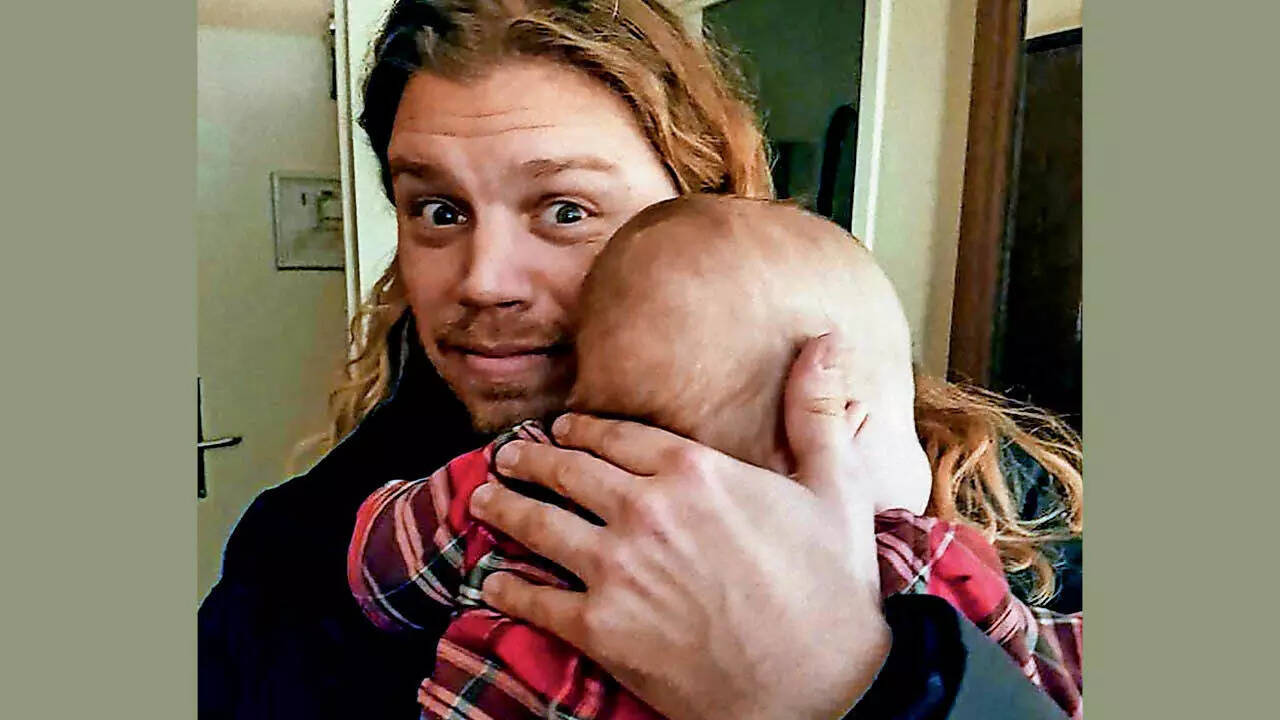
Under the guise of altruism, Jonathan Meijer, a Dutch YouTuber, donated his sperm across the globe
Sperm scamsThe YouTuber who wouldn’t stop donatingThe impulse to “help” repopulate the world is not limited to billionaires.Under the guise of altruism, Jonathan Meijer, a Dutch YouTuber, donated his sperm across the globe – through private arrangements and at least 11 sperm banks in the Netherlands alone.Meijer’s actions became the subject of the Netflix documentary The Man With 1,000 Kids . In early communications with prospective parents, he claimed he intended to help only a small number of families. That assurance later proved false. In court, Meijer admitted to having nearly 600 children, though estimates that include both private and sperm-bank donations suggest the figure could be as high as 3,000. A Dutch court ultimately barred Meijer from donating sperm to new parents, imposing a fine of €100,000 for each violation.The doctor who used his ownA different kind of betrayal unfolded in the United States. The Netflix documentary Our Father examines the case of Donald Cline, a former fertility doctor in Indianapolis whose patients later discovered that they – and dozens of others – were biologically related through him.According to court records, Cline routinely replaced sperm samples provided by donors or patients’ partners with his own, inseminating more than 100 women without their knowledge or consent. The deception remained hidden for decades. Jacoba Ballard, one of Cline’s biological children, was among the first to uncover the truth. She told The Atlantic that she found her first half-sibling through an online forum for donorconceived people and realised that their parents had both been treated by the same doctor. Others pieced together the connection through DNA testing. “When I opened up Ancestry, I had over 3,000 hits,” one said.