Union Budget 2026: From assembly to autonomy – What’s next for India’s manufacturing?
With the Union Budget just days away, the manufacturing sector is being seen as one of the main reasons India has stayed economically resilient—even as many countries face slow growth.The Economic Survey 2025–26 has set an upbeat tone, projecting India’s GDP growth at 7.4 per cent for the current financial year. In simple terms, that projection signals confidence that factories, construction, and businesses will keep expanding, creating jobs and supporting incomes.A big reason behind this optimism is the government’s push to make India a global export hub—meaning a country that not only produces for its own needs, but also sells more goods to the rest of the world. Exports matter because they bring foreign currency into the country, support industrial expansion, and can create steady employment in manufacturing and related services like logistics.Government data for FY 2024–25 shows India’s total exports reached $825.3 billion. However, this rise was mainly driven by strong growth in services exports—things like IT services, consulting, financial services, and back-office work sold to global clients.Manufacturing exports (physical goods like electronics, medicines, machinery, textiles, etc.) also got a lift, with one major driver being the Production Linked Incentive (PLI) schemes.Think of PLI as a government program that rewards companies for producing more in India: if firms meet certain production targets, they receive incentives. The goal is to make it easier and more attractive to manufacture at scale in India rather than import finished products.Based on the government press release, the PLI schemes (across 14+ sectors) have, as of late 2025:
- Attracted over Rs 2.0 lakh crore in actual investment (money put into factories, equipment, and operations)
- Generated incremental production and sales of more than Rs 18.7 lakh crore (additional goods produced/sold compared to earlier levels)
- Directly contributed to exports of over Rs 8.20 lakh crore, led by electronics, pharmaceuticals, and telecom products
Put simply, the government is claiming that PLI has helped companies invest more, produce more, and export more—especially in sectors where India wants to become globally competitive.This year’s Budget is expected to give more clarity and funding for the National Manufacturing Mission announced last year. The idea is to create a practical blueprint for different types of industries—small, medium, and large—so that policy support is not one-size-fits-all.Key areas that are likely to get attention include:
- Electronics and semiconductors: Continued funding for the India Semiconductor Mission, because chips are the “brains” inside phones, cars, appliances, and industrial machines; reducing chip imports can make India’s supply chains more secure and lower costs over time
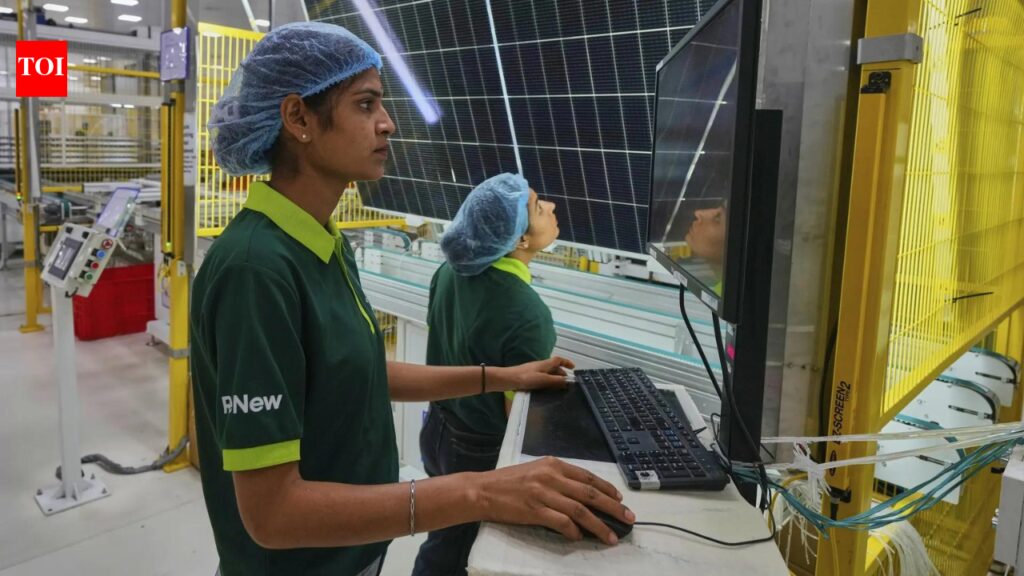
- Green energy manufacturing: Higher priority for EV batteries, solar PV modules, and green hydrogen, as India tries to build domestic capacity for clean-energy equipment (instead of importing it) while also moving toward net-zero targets
- MSME support: Expanded credit guarantees (up to Rs 10 crore) and interest support to help smaller manufacturers access affordable loans; this matters because small firms often struggle with working capital, expensive credit, and the costs of meeting export-quality standards.
For common readers, the MSME piece is crucial. When smaller manufacturers can borrow at reasonable rates and invest in better machinery or quality systems, they can supply bigger companies, compete in export markets, and hire more workers locally.The 2025–26 Budget kept a strong focus on infrastructure-led growth by announcing a record capital expenditure (capex) outlay of Rs 11.21 lakh crore. Capex is essentially long-term spending—roads, railways, ports, industrial corridors, power systems, and logistics upgrades.This matters to manufacturing because infrastructure reduces the “cost of doing business.” Better highways and ports can cut delivery time, reduce fuel and storage costs, and improve reliability—key factors for exporters competing against countries with efficient logistics.For Budget 2026, the expectation is that the government will keep this capex momentum but focus more on “outcome-based” spending. In other words, not just announcing big allocations, but showing measurable results—like higher factory output, stronger exports, and improved global market share for Indian products.