Oxygen on Earth is expiring and sun may be the reason for it |
You do not usually notice oxygen unless it is missing. It is just there when you wake up, when you step outside, when you breathe without thinking. The sky looks the same as it did yesterday. Nothing hints at an expiry date. Yet some scientists have been quietly asking how long this arrangement can really last. Not how long humans survive, or forests, or cities, but how long the air itself stays friendly. Recent research backed by NASA and led by teams at Toho University and Georgia Tech takes a long view. It stretches so far ahead that everyday worries fall away. In that distance, oxygen stops looking like a permanent feature and starts to look more like a phase, one that arrives, settles in, and eventually moves on.
Oxygen on Earth is depleting due to increasing sun activities
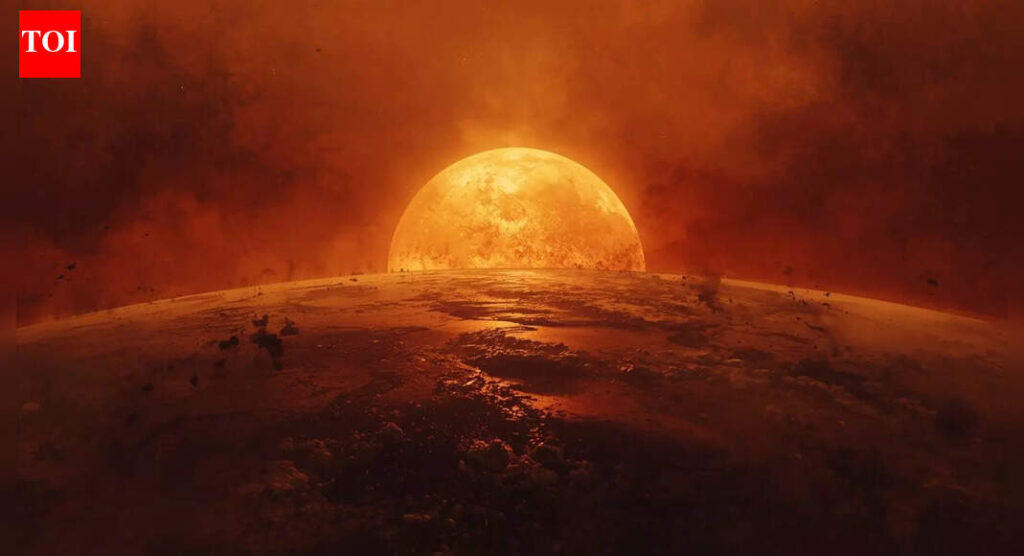
According to new work supported by NASA and led by researchers at Toho University and Georgia Tech, the trigger is not something humans are doing. It is the Sun itself. Over hundreds of millions of years, it slowly gets brighter. That extra energy speeds up weathering on land. Rocks break down faster and pull carbon dioxide out of the air. At first this seems harmless. Less carbon dioxide means less heat trapped. But plants rely on carbon dioxide to photosynthesise. As levels drop, photosynthesis weakens. Less photosynthesis means less oxygen released. The models show a tipping point. Past it, oxygen production cannot keep up. Methane builds up. The ozone layer fades. The sky stops offering protection from harsh radiation. One of the lead researchers described this future Earth as a world of anaerobic life. Not dead, just different, and no longer suited to complex creatures like us.
Earth before oxygen took over
For most of Earth’s history, oxygen was not running the show. Early life forms managed just fine without it. The planet went through what scientists call the Great Oxidation Event, a slow rise in oxygen driven by tiny organisms learning to use sunlight in new ways. That change reshaped everything. Oceans altered their chemistry. New forms of life became possible. According to the new modelling, that oxygen rich state is not the final chapter. The researchers ran more than 400,000 simulations of Earth’s future and found a pattern. Once oxygen levels start to fall, they do not drift gently down. They collapse. The planet flips back towards conditions closer to its ancient past. Microbes that do not need oxygen would dominate again. Animals and plants would quietly disappear. It is not dramatic in a movie sense. It is just chemistry and time doing their work.
Why does this distant future matter now
A billion years sounds so remote that it barely feels real. Humans have been around for a blink of that time. Farming is even younger. Nothing in this research suggests an imminent threat. Yet it matters for how we think about life beyond Earth. Oxygen is often treated as the key sign of life when scientists study distant planets. This work suggests that oxygen rich periods may only cover a fraction of a living planet’s lifetime. Many inhabited worlds could be missed simply because they sit outside that window. Closer to home, the idea lands more quietly. The air that feels ordinary is not guaranteed forever. Earth is not a fixed stage. It shifts under its own rules. The oxygen era is special, but it is also temporary, even if its ending lies far beyond any human horizon.