Bhubaneswar smart city authorities to upgrade traffic signals for improved vehicle flow | Bhubaneswar News
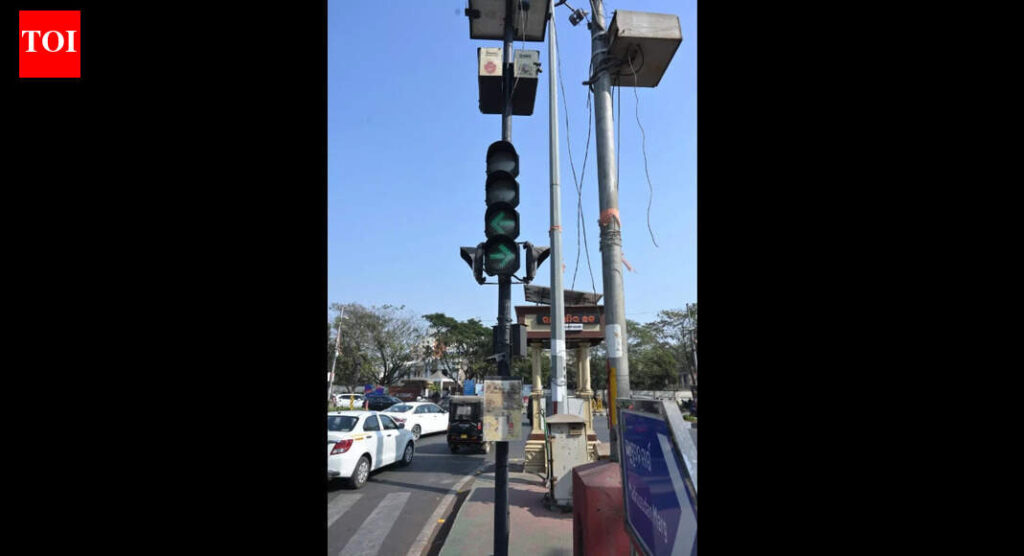
Bhubaneswar: The Bhubaneswar Smart City Limited (BSCL) has rolled out an ambitious plan to upgrade the city’s traffic signalling system. The initiative, part of the smart city mission, aims to modernise 50 existing adaptive traffic signals and install 25 new ones at strategic junctions, along with 6 pelican signals and 5 blinkers.The upgraded system will deploy the latest adaptive traffic signal control (ATSC) technology integrated with the city’s Intelligent Command and Control Centre (ICOMC). The existing signalling system, which runs on sensor-based traffic data, will be reassessed based on the current vehicle density at respective junctions.It will also feature an emergency vehicle priority system, a first-of-its-kind initiative for the city, to ensure faster passage for ambulances, fire tenders and other related emergency vehicles, and a traffic management analytics solution with simulation and prediction modules for real-time decision-making, officials said.“The new system will use advanced algorithms to optimise signal timings, reduce congestion and improve traffic flow. Our goal is to make Bhubaneswar a model smart city focused on liveability, workability, security and sustainability,” said BSCL general manager Purandar Nanda.The project covers 75 traffic signals, including the 25 proposed for new installation at key junctions, and includes 5 years of maintenance and operations support. BSCL officials said that the upgradation will significantly improve urban mobility and support data-driven traffic management in the city.Commuters welcomed the move, hoping it would ease the city’s growing traffic woes. “During peak hours, junctions like Jaydev Vihar and Rupali Square are a nightmare. If these smart signals work as promised, it will be a big relief,” said Ananta Kumar Das, a software professional.Auto-rickshaw driver Prakash Behera echoed similar sentiments. “We waste so much fuel waiting at signals. Smarter timing will save time and money. Currently, many signals are not working as expected, and I hope this upgrade will fix the issue and bring greater relief to commuters,” he said.Rohit Mishra, a first-year engineering student, said that the emergency vehicle priority is a great idea. “I have seen ambulances stuck in traffic. This system can save lives. Though the traffic personnel give priority to the passage of these vehicles, the automated system will help to a great extent,” he said.Traffic police officers also expressed optimism. “Integration with ICOMC will help us monitor and manage traffic better, especially during VIP movements and festivals. The current system needs an upgrade since it is nearly a decade old,” a traffic officer deputed at Patia Square said.Bhubaneswar had witnessed a complete replacement of the timer-based traffic signals with adaptive ones during the initial days of the implementation of smart city projects during 2016-17.