How Ramesh Sippy left his studies to make ‘Sholay’ and save his father’s film career: ‘Survival became the priority’ |
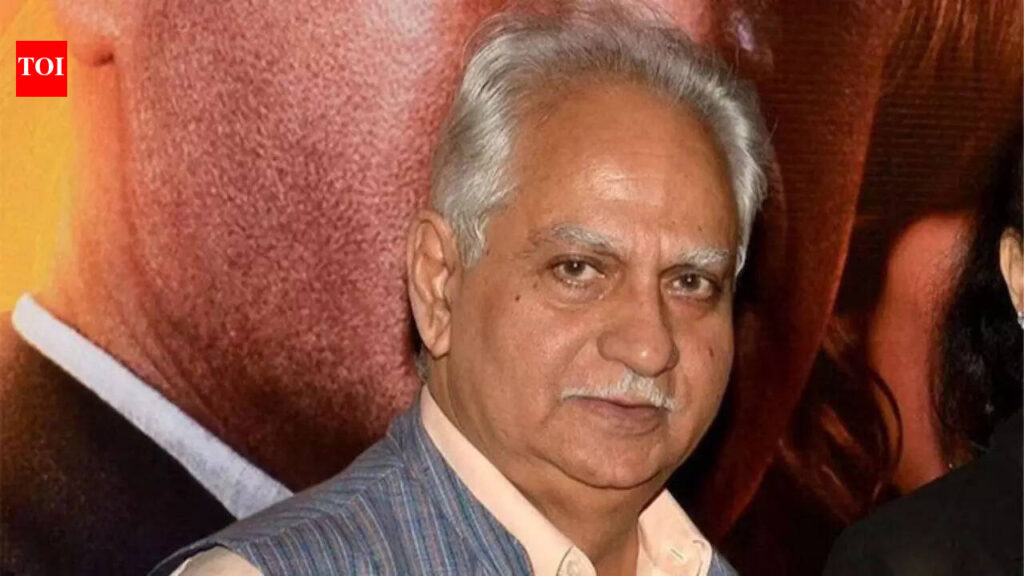
Ramesh Sippy is remembered today as the director who delivered one of Hindi cinema’s most enduring classics, but his journey to ‘Sholay’ began far from certainty or privilege. He left his studies in London and returned to Mumbai at a turning point, not to chase ambition, but to rescue his father’s struggling film business. What followed was a chain of decisions shaped by loss, risk, and faith that ultimately altered Indian cinema. His story is also inseparable from that of his father, producer GP Sippy, whose life was upended by Partition and rebuilt through grit and chance. Born on January 23, 1947, Ramesh Sippy turned 79 this year.
Ramesh Sippy’s journey to Sholay and family’s struggle
According to reports published by The New York Times, GP Sippy’s life changed overnight during the Partition of 1947. He fled Karachi and arrived in India with nothing. “Survival became the priority,” the report noted, adding that he “sold carpets on the streets to earn a basic income.” After failed ventures, including running a restaurant, he found stability in real estate and slowly rebuilt his finances.Cinema entered his life by accident. While supervising the construction of a home for actor Nargis Dutt, GP Sippy grew curious about films. He acted in small roles, then moved into production under the banner of Sippy Films. He focused on modest crime dramas, including ‘Sazaa’ in 1953. The film earned “reasonable commercial results,” but major success stayed out of reach.Over the years, he produced titles like ‘Shrimati 420’, ‘Chandrakant’, ‘Light House’, ‘Bhai Behan’, and ‘Brahmachari’. None became big box office hits. The industry began to label him a lower-tier producer, a perception that added pressure at home.
‘Sholay’ making and Bollywood history
During this difficult phase, GP Sippy called his son back from the London School of Economics. Ramesh abandoned his education and entered the film industry. He made his directorial debut with ‘Andaz’ in 1971, starring Shammi Kapoor, Rajesh Khanna, and Hema Malini. The film also marked the first collaboration of Salim Khan and Javed Akhtar.He followed it with ‘Seeta Aur Geeta’ in 1972, which succeeded and gave him confidence. Then came the risky idea of a Western-inspired epic. Ramesh asked his father for one crore rupees. The budget later grew to nearly three crores. GP Sippy backed him without hesitation.When ‘Sholay’ released, its response was slow. Within a week, audiences returned in huge numbers. The film became the biggest hit of its time. Its success cemented Ramesh Sippy’s reputation, but it also raised the bar for everything that followed. Audiences and critics measured his later work against ‘Sholay’, and few films, including his own, could clear that standard.