Unprecedented Cyclone Activity in Bay of Bengal: Four Formed in Just Two Months | Goa News
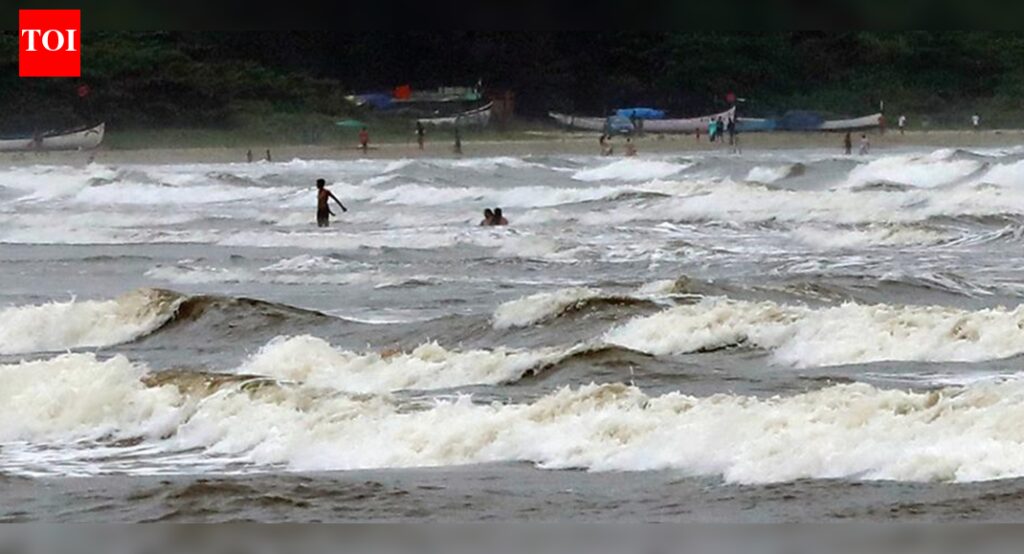
Panaji: Four cyclones formed in the Bay of Bengal in the last two months during late 2025, maintaining the annual average of three to four cyclones in the north Indian Ocean. This marked another year of extreme weather events, with all cyclones developing during the post-monsoon season.The year 2025 initially appeared to have fewer cyclones but ended similarly to 2024 with four cyclones forming exclusively in the Bay of Bengal. Cyclone Shakti and Cyclone Montha partially affected the region, followed by Cyclone Senyar and Cyclone Ditwa forming back-to-back in late Oct.“It appears to be a record of sorts. The most interesting factor is that all of them formed in a matter of rarity and that too in a space of two months all in the post-monsoon season,” said M R Ramesh Kumar, retired chief scientist at NIO.The rapid formation of these cyclones is linked to warming in the Indian Ocean, which is currently the warmest of all global oceans. This pattern differs from 2019, known as the year of cyclones, when eight systems formed with longer intervals between them, except for Super Cyclone Kyarr and severe cyclonic storm Maha in Oct.Over the past seven years, 35 cyclones have formed in either the Arabian Sea or Bay of Bengal. Following 2019’s high activity, there were five cyclones each in 2020 and 2021, three in 2022, six in 2023, and four each in 2024 and 2025.“This time, it is a weak La Nina phenomenon that has influenced these four. It is slowly brewing in the eastern equatorial Pacific Ocean near Peru in south America,” Kumar said.A notable shift occurred in 2025 as all four cyclones formed in the Bay of Bengal, despite a depression in the Arabian Sea affecting Goa like a cyclonic storm in Oct. Since 2019, the Arabian Sea has experienced increased cyclone formation, with more than 15 cyclones developing over the past seven years.The warming Indian Ocean has created favourable conditions for cyclone development, with cyclogenetic conditions contributing to these weather patterns. “Maybe, the weak La Nina and other cyclogenetic conditions induced their formation only in the Bay of Bengal,” Kumar added.